
Why Your Best People Can’t Save a Broken Delivery System

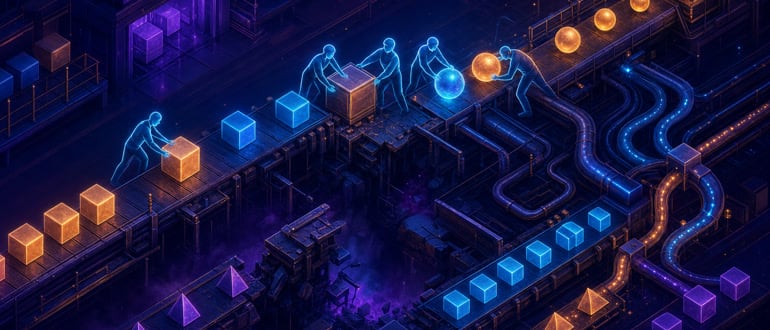
When delivery falls apart, the reflex is to blame the team. Missed dates, quality slips, a burned-out squad — leadership tends to reach for a personnel fix and quietly move on. The uncomfortable pattern in most enterprise organizations is that the system itself is the failure mode. Decision latency, priority misalignment, and layers of governance that were designed for a slower era grind against the very people leaders keep asking to grind harder. Talented engineers cannot outrun a delivery pipeline that is structurally set up to stall.

Marnus Marx, founder and Delivery Confidence Coach at Elanvia Consulting, joined Alan Shimel to unpack what that structural failure actually looks like from the inside. Marx came up through Unix and Linux systems before moving into DevOps and delivery coaching, which shapes how he diagnoses these breakdowns — as engineering problems in the socio-technical system, not character flaws in the humans stuck inside it. His frame of “delivery confidence” is a leadership discipline: the degree to which an organization can trust that what it promises externally will actually ship.

Marx walks Shimel through the systemic issues that get mislabeled as execution failure. Decision latency is the biggest culprit — the days or weeks it takes to answer a simple question with real consequences, while everyone downstream burns cycles waiting or guessing. Priority misalignment is the second, where the work that gets pulled into a sprint has almost no relationship to the outcomes leadership actually cares about. Both wear down teams in ways that no amount of individual effort can compensate for.

The bigger thread is how the shift to agentic AI is going to expose those cracks fast. Marx argues coaching has to run in two directions — pulling over-eager AI adopters back to the outcomes that actually matter, and pulling anxious resistors forward by redefining employee value around outcomes instead of tasks. The organizations that survive that transition will be the ones that stop protecting broken delivery systems and start rebuilding them around clarity, decision speed and alignment.


from DevOps.com https://ift.tt/1kW2sa5

Comments

Popular posts from this blog

Building a Security Feedback Process for DevOps

The last few years have seen some major slip-ups in the security space among all major cloud providers, resulting in uncertainty and speculation. That’s understanding; cloud security is an extremely complicated subject as enterprises build and deploy applications faster than ever before to keep up with business requirements. Most of the security issues that occur […] The post Building a Security Feedback Process for DevOps appeared first on DevOps.com . from DevOps.com http://bit.ly/2L1DS7t

Cloudbees Is A Launch Partner For Google Cloud Run As Product Goes Ga

Industry Leaders Collaborate to Offer Streamlined Deployment of Containerized Applications, Better Access to CloudBees Solutions on Google Cloud Platform Marketplace   GOOGLE CLOUD NEXT, LONDON AND SAN JOSE, CA. – November 20, 2019 – CloudBees, the enterprise DevOps leader powering the continuous economy, today announced an extension of its partnership with Google. As a Google […] The post Cloudbees Is A Launch Partner For Google Cloud Run As Product Goes Ga appeared first on DevOps.com . from DevOps.com https://ift.tt/2XuFTxc

Carbon-Aware DevOps: Turning CI/CD Pipelines Into Emissions-Controlled Workloads 

Turning continuous integration and continuous delivery (CI/CD) pipelines into emissions‑controlled workloads is a strategy businesses adopt to reduce the carbon footprint of their pipelines. This article examines how a Carbon-Aware DevOps strategy can help optimize CI/CD pipelines for sustainability by reducing their carbon footprint while also decreasing costs and meeting the increasing demand for innovative, eco-friendly solutions.   Understanding the Problem   Today’s organizations take advantage of CI/CD pipelines to streamline and accelerate their software delivery. However, these CI/CD pipelines can become a hindrance to sustainability because of the resources required to create, build, test and ultimately deploy software into production.   Typically, CI/CD pipelines run tens of thousands of automated builds, tests and deployments daily, thereby consuming significant compute and energy resources. If you don’t take the steps necessary to reduce the emissions generated by these ...