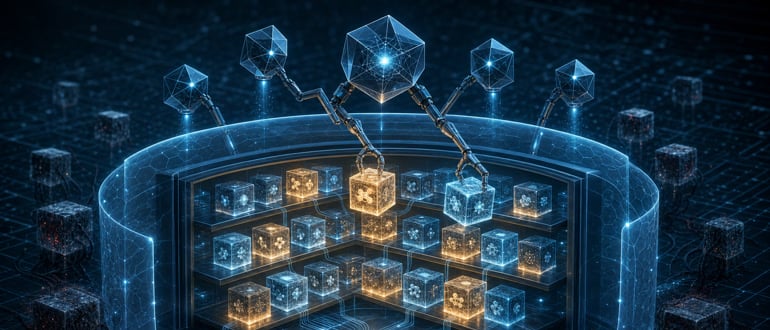

Open source supply chain security has been a scanner-and-CVE game for years — pull the package, run the scan, cross-reference known vulnerabilities, hope the metadata is current. That model always had gaps, and AI agents are widening them fast. Agents pull open source components from wherever they can find them, at machine speed, and the after-the-fact scan is not a control that keeps up. What developers and platform teams actually need is a curated catalog that vets components before they enter the environment, not after they cause a problem.
Alan Shimel sits down with Leslie Pascual, Field Engineering Manager for AI and Security Solutions at ActiveState, to work through what a trusted open source catalog looks like in practice and why it becomes table stakes as soon as AI agents join the software supply chain. Pascual brings more than 20 years across engineering, architecture and leadership, with a stint hardening enterprise healthcare applications that pushed her into cybersecurity. Her point is direct — scanners compare packages to CVE metadata after the fact, which is fundamentally different from vetting a component before it ships.
They get into the mechanics. Packages go through a cool-down period, secure build, attestation and strong provenance before landing in the catalog, which now spans the top nine open source ecosystems and is expanding to twelve — Python, Java, JavaScript, R and more. Continuous monitoring keeps catalogs current with patches and fixes, and SBOMs and attestations ship with every component. The integration side matters just as much: catalogs plug into JFrog Artifactory, Sonatype and Cloudsmith so developers see no extra friction, and mirrored repositories let each customer expose the catalog inside their own Artifactory instance.
The forward-looking piece is where AI agents plug in directly. Tools like Claude and Cursor need a source of truth for open source components, and Pascual argues that the trusted catalog becomes exactly that — the place agents pull from instead of grabbing whatever the internet returns. An MCP server is on the roadmap to extend that intelligence directly into the CI/CD pipeline. The broader read is that shifting security all the way left, past the scanner and into the catalog itself, is what actually makes AI-assisted development safe enough for enterprise teams to scale.
from DevOps.com https://ift.tt/mHPO5V8
Comments
Post a Comment